
Calls for Stronger Research Commercialization
Prof. Shaukat Calls for Stronger Research Commercialization During Visit to KIRDI
NAIROBI, Kenya, July 8, 2026
— Principal Secretary for the State Department for Science, Research and Innovation, Prof. Shaukat Abdulrazak, has challenged Kenya's research institutions to accelerate the commercialization of innovations, strengthen partnerships with industry, and position science and technology as key drivers of the country's industrial transformation.
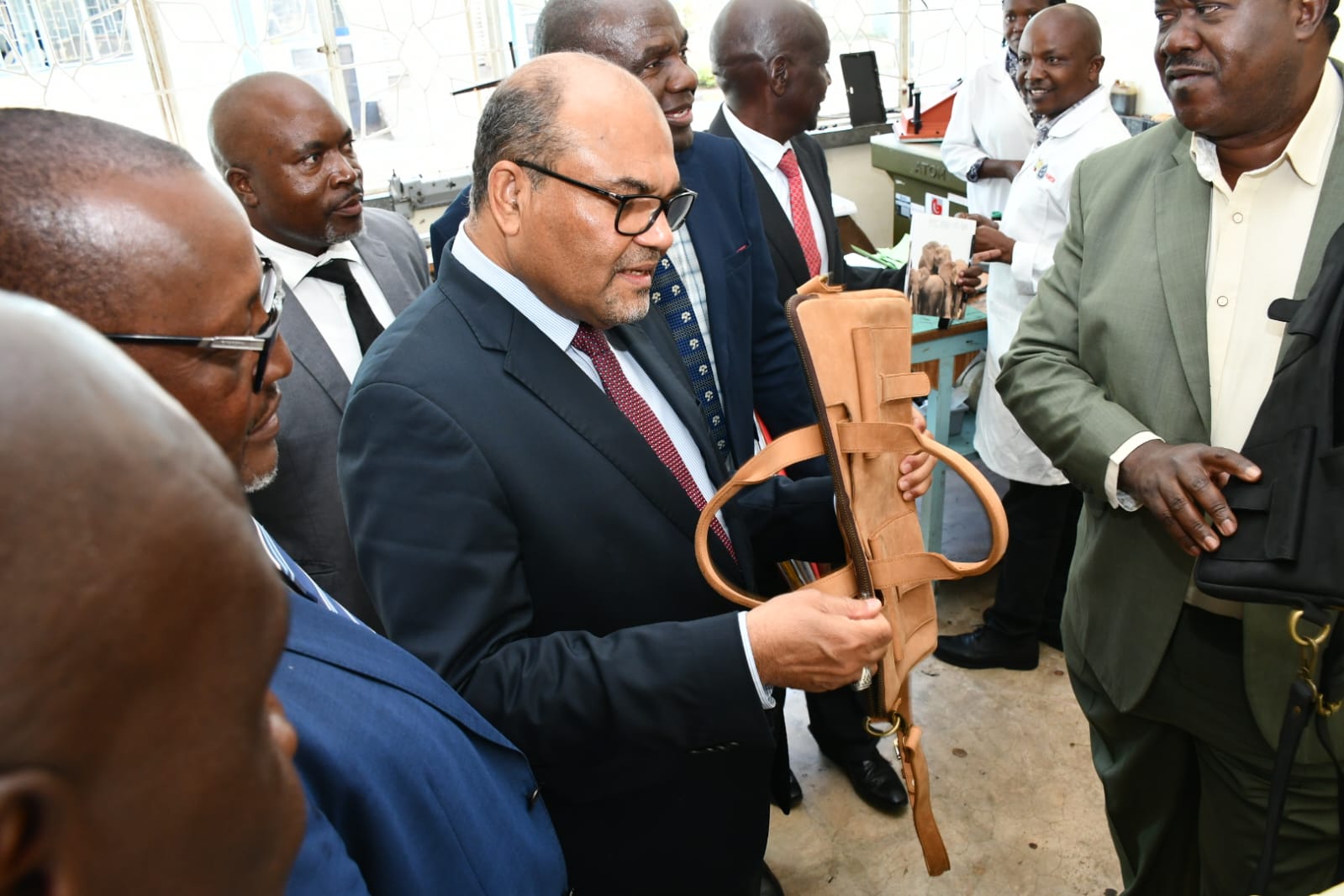
The Principal Secretary made the remarks during a visit to the Kenya Industrial Research and Development Institute (KIRDI), where he toured research laboratories, inspected the KIRDI Techno Centre, and held interactive sessions with scientists and researchers to gain a deeper understanding of the institute's research, technology development and commercialization initiatives.
During the laboratory tour, Prof. Shaukat visited facilities specializing in industrial biotechnology, renewable energy, food processing, materials engineering and environmental technologies. He commended KIRDI scientists for developing practical innovations that respond to national challenges and support Kenya's manufacturing and industrialization agenda.
The Principal Secretary also inspected the KIRDI Techno Centre, a flagship innovation and technology commercialization facility currently under construction. He was informed that the project is approximately 80 per cent complete and is expected to be completed by March 2027.
Once operational, the Techno Centre is expected to provide modern infrastructure for technology development, business incubation, product testing, skills development and innovation commercialization, creating stronger linkages between researchers, entrepreneurs and industry.
Prof. Shaukat welcomed the progress made on the facility, noting that such investments will play a critical role in strengthening Kenya's innovation ecosystem and accelerating industrial development through research-driven solutions.
Addressing scientists and management, the Principal Secretary emphasized the need for research institutions to move beyond knowledge generation and focus on transforming scientific discoveries into commercially viable products, businesses and jobs.
"We must move beyond publishing research to commercializing innovations that create jobs, strengthen local manufacturing and improve the lives of Kenyans," he said.
Prof. Shaukat revealed that the State Department is spearheading the establishment of national innovation clusters by mapping the unique areas of specialization across Kenya's public and private universities. He said institutions have been requested to identify their top three niche areas and leading experts to facilitate stronger collaboration among universities, research institutions, TVETs, industry and development partners.
He explained that the proposed clusters will serve as centres of excellence for industrial development, enabling institutions to pool expertise, share resources and accelerate technology transfer and commercialization.
The Principal Secretary observed that while Kenya has abundant scientific talent and innovative ideas, the country must strengthen pathways that move innovations from laboratories to the marketplace. He urged researchers to embrace entrepreneurship and work more closely with industry to unlock the full economic value of research.
Prof. Shaukat further called for stronger partnerships to mobilize both domestic and international financing for science, research and innovation. While acknowledging the limitations of public funding, he encouraged institutions to actively engage the private sector, philanthropists, development partners and international research organizations to support innovation programmes.
He also highlighted ongoing government initiatives to strengthen the policy environment for emerging technologies, including the implementation of Kenya's Artificial Intelligence Strategy, development of an Artificial Intelligence Policy and advancement of the country's bioeconomy agenda.
The Principal Secretary challenged KIRDI to document and communicate the impact of its technologies by showcasing enterprises and communities whose livelihoods have improved through the institute's innovations.
"The most powerful ambassadors of your work are the entrepreneurs and businesses whose lives have been transformed by your technologies. Their success stories will inspire greater investment and public confidence in research and innovation," he said.
He invited KIRDI to showcase market-ready innovations and successful enterprises during next year's national Science, Research, Technology and Innovation Conference, saying practical demonstrations of impact are essential in promoting a culture of innovation.
Prof. Shaukat reaffirmed the State Department's commitment to working closely with KIRDI and other research institutions to strengthen Kenya's innovation ecosystem, build research capacity, attract investment and transform scientific knowledge into sustainable economic growth and industrial development.