
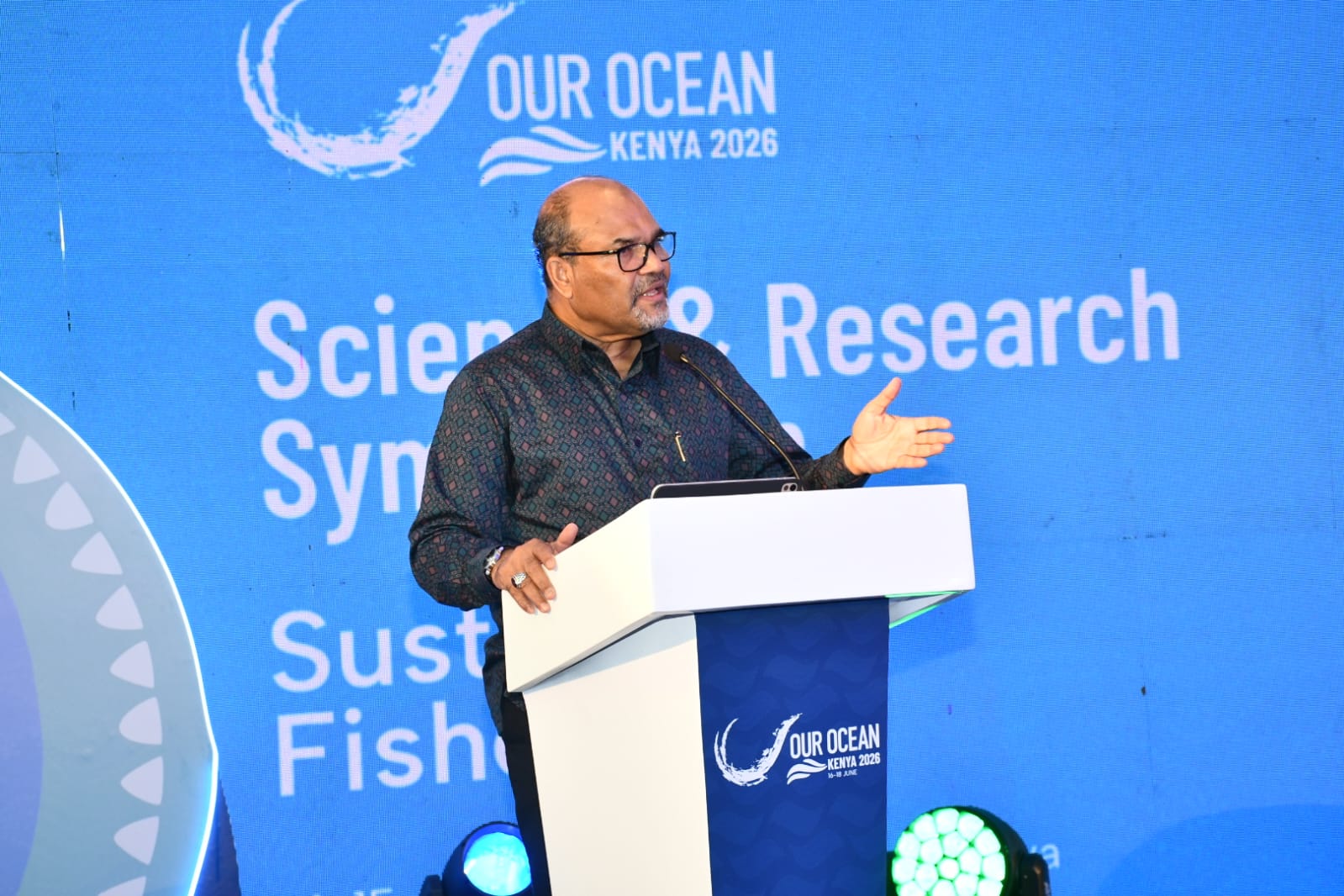
Prof. Shaukat Calls for Innovation and Partnerships at 11th Our Ocean Conference
Prof. Shaukat Calls for Innovation and Partnerships at 11th Our Ocean Conference
MOMBASA, Kenya, June 14, 2026 — Principal Secretary for Science, Research and Innovation Prof. Shaukat Abdulrazak on Sunday delivered the opening remarks at the 11th Our Ocean Conference, urging global stakeholders to strengthen collaboration, invest in innovation and accelerate efforts toward sustainable ocean management.
The conference, organised by the Kenya Marine and Fisheries Research Institute (KMFRI), brought together policymakers, researchers, development partners, industry leaders and ocean stakeholders from around the world to discuss challenges and opportunities within the blue economy.
Speaking during the opening ceremony, Prof. Abdulrazak welcomed delegates and highlighted the importance of science, research, innovation and technology in addressing global ocean challenges. He said oceans play a vital role in economic growth, food security, climate regulation and livelihoods, making their protection and sustainable use a shared international responsibility.
He emphasized the need to translate scientific research into practical solutions to tackle marine pollution, biodiversity loss, climate change, sustainable fisheries, maritime security and ecosystem conservation. According to the Principal Secretary, emerging technologies such as artificial intelligence, satellite imaging and digital tools are creating new opportunities for monitoring and protecting marine resources.
Prof. Abdulrazak also called for stronger partnerships among governments, research institutions, the private sector, development agencies and local communities. He noted that collaboration is essential for generating knowledge, mobilizing resources and implementing effective solutions that benefit both people and the environment.
The Principal Secretary reaffirmed the Government of Kenya’s commitment to supporting research and innovation through policy initiatives and strategic investments. He encouraged greater private sector involvement in research financing and commercialization to help transform scientific discoveries into products, services and enterprises that contribute to economic development.
Addressing youth participation, Prof. Abdulrazak said Africa’s growing youthful population presents a major opportunity for innovation and transformation. He urged increased investment in mentorship programmes, postgraduate training, research opportunities and innovation platforms to empower young people to contribute to sustainable development and the blue economy.
He further stressed the importance of strengthening research excellence through initiatives such as establishing research chairs in key areas including the blue economy and ecosystem sciences. Such efforts, he said, would enhance knowledge generation and support evidence-based decision-making.
Prof. Abdulrazak encouraged researchers to embrace entrepreneurship and focus on commercializing research findings. He called for stronger links between academia and industry through innovation hubs, incubation centres and collaborative platforms that can help bring market-ready solutions to life.
He noted that the success of the blue economy should be measured not only by scientific achievements but also by tangible outcomes such as healthier oceans, resilient coastal communities, sustainable livelihoods and responsible resource management.
Quoting renowned oceanographer Sylvia Earle, he reminded participants that “No water, no life. No blue, no green,” underscoring the connection between ocean health, environmental sustainability and human prosperity.
The conference is expected to generate recommendations and partnerships aimed at advancing sustainable ocean governance and strengthening global efforts to protect marine resources for future generations.